
Does Oregon Make Good Red Wine, or Is It All Pinot Noir?
Say “Oregon wine” to anyone outside Oregon and watch what happens. They nod, they smile, they say the word Pinot like it’s the only red grape that’s ever been grown here. Sometimes they say Willamette Valley too, mostly to prove they can pronounce it. Nobody mentions Tempranillo. Nobody mentions Malbec. Nobody has ever once, in the history of wine small talk, brought up Sangiovese grown two hours south of Portland.
So: does Oregon make good red wine beyond Pinot Noir? Yes. Emphatically, measurably, bottled-and-selling-out yes. We’re in Ashland, in the Rogue Valley, which is a different climate than the Willamette the way a greenhouse is a different climate than a walk-in cooler. We get more heat, more sun, longer stretches of actual summer. That’s not a knock on Pinot country. It’s just a different kitchen, and it means a different menu.
Why does everyone think Oregon is only Pinot Noir country?
Because the Willamette Valley earned that reputation fair and square, decades ago, and reputations in wine move about as fast as the wine itself ages. Pinot Noir is a genuinely difficult grape, it does something special in that specific cool climate, and the marketing machine around it has been running strong since the 1970s. None of that is wrong. It’s just incomplete, the way knowing one sibling in a big family tells you nothing about the other four.
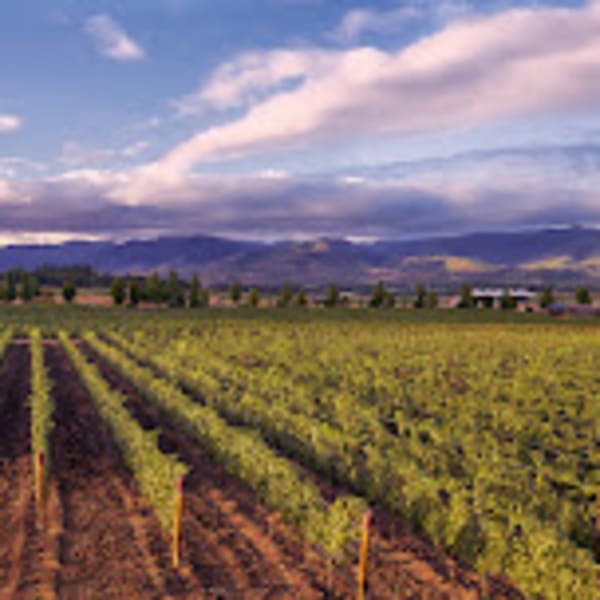
The Rogue Valley sits south, hotter, drier, and at elevation, which is a completely different argument for a completely different set of grapes. Cabernet Sauvignon, Syrah, Malbec, Tempranillo, Sangiovese — these all want sun the way Pinot Noir wants to be left alone in the shade with a sweater on. We have that sun. We also, less proudly, have birds who treat our vineyard like an all-you-can-eat buffet; one year they got through roughly 90 percent of the fruit before we’d finished bragging about the vintage. Farming is not our department. Mostly because Kimberly is in charge of winemaking, and neither of us seems to be in charge of farming. The grapes that do make it to the crush pad, though, get turned into wine by someone who takes it a great deal more seriously than we take the farming.
What does Oregon red wine actually taste like outside of Pinot?
Depends entirely on which bottle you’re holding, which is the whole point. Our Cabernet Sauvignon is structured and serious, built for a ribeye and a long table and a conversation that outlasts the meal. The Malbec — we pour both the 2021 and the 2020 — runs dark and plush, closer to a fireplace than a sunbeam. The Syrah, in 2020 and 2019, has a smoky, peppery backbone that makes a charred, blistered pizza crust look like it was invented specifically to be eaten next to a glass of it. Order the two together and thank us later.
Then there’s the stuff that proves Oregon reds aren’t just trying to out-Napa Napa. The Tempranillo is leather and dried cherry and a little dust, like someone smuggled a piece of Rioja across state lines. The Sangiovese is bright, savory, higher-acid — the wine you want next to tomato sauce, not instead of it. And our Wingman Syrah is the lighter, friendlier cousin of the serious Syrah, the one you bring when you don’t want the night to feel like a lecture.
None of these taste like Pinot Noir. None of them are trying to. That’s the actual answer to the original question: Oregon doesn’t make good red wine despite not being all Pinot Noir, it makes good red wine because it isn’t.
Is southern Oregon actually different from the Willamette Valley, or is that just a sales pitch?
It’s geology and weather, not a sales pitch, though we understand the skepticism — we’d be skeptical of us too. The Rogue Valley gets noticeably hotter days and bigger temperature swings at night, which is exactly the combination that thick-skinned, sun-loving red grapes want. Cabernet Sauvignon in the Willamette Valley is a science experiment. Cabernet Sauvignon in the Rogue Valley is just Tuesday.
This is also why you’ll find more Rhône and Mediterranean-leaning grapes down here — Syrah, Tempranillo, Sangiovese — while the Willamette stays loyal to Pinot Noir and its elegant, difficult friends. Two regions, one state, almost no overlap in what grows well. Lumping them together is a little like assuming all of California tastes like Napa Cabernet because you saw it on a label once in an airport.
What about Oregon rosé — does that fit into “serious red wine” at all?
Fair question, and the honest answer is: it’s not trying to be a serious red, it’s trying to be the wine you actually drink. Our rosé is made from Merlot, which is unusual enough that people ask about it twice, and it will never win over a critic who’s scoring on seriousness. Everyone else loves it anyway, especially the people who walk in swearing they hate rosé on principle. Kirk’s grandfather once brought a bottle of White Zin to a family gathering back in the 80s, full hair, full Miami Vice confidence. Our rosé is better, and it didn’t need the hair to get there.
The pushback we hear most, especially once the weather turns, is that it’s cold out, people want something heartier, basically a stew in a glass. Reasonable instinct. But a Merlot rosé with real structure doesn’t fold under a cooler night the way a thin, candy-pink wine does — it’s not a swap for the Cabernet, it’s a different kind of correct, poured earlier in the evening before the Tempranillo takes over.
If someone’s only ever had Pinot Noir, where should they start with Oregon reds?
Start with something that still respects where it came from but clearly isn’t trying to be Pinot Noir’s cousin. The Sangiovese is a gentle on-ramp — bright, food-friendly, nothing intimidating about it. From there, the Wingman Syrah is the easy, unpretentious middle step, the wine equivalent of someone explaining a joke without making you feel slow for asking. Once that clicks, the full Syrah and the Tempranillo are where things get genuinely interesting, and the Cabernet Sauvignon and Malbec are for whenever the occasion deserves a wine that takes up a little more space on the table.
We’d rather walk someone through that progression in person than have them guess from a shelf. A flight lets you taste the actual range side by side instead of taking our word for any of it, and it tends to end the Pinot-or-nothing argument faster than we ever could with a paragraph.
So is Oregon a serious red wine state, or not?
Yes, with an asterisk the size of the Rogue Valley. The Willamette Valley will keep making extraordinary Pinot Noir, and good for it. But two hours south, in a hotter, sunnier, more stubborn stretch of the state, there’s a whole second argument happening — Cabernet Sauvignon, Syrah, Malbec, Tempranillo, Sangiovese — made by people who are mostly winning the fight against birds and occasionally, happily, losing the argument about which bottle to open next.
Come taste the part of Oregon that never made it onto the postcard.
Come pour a glass ->